
Where’s Naju?
Naju (나주시) is a small populated “city” in South Jeolla Province, South Korea. The capital of South Jeolla was located at Naju until it was moved to Gwangju in 1895. The name Jeolla (전라) actually originates from the first character of Jeonju (전주) and the first character of Naju (나주).
Cool history: In 1986, the governmental name changed into modified from Geumseong to Naju. In 1995, Naju city became extended to include Naju county.
What’s Naju famous for?
If you watch k-dramas or visit Seoul in South Korea, you may see “나주 곰탕” Naju gom-tang soup restaurants or hear about the delicious “나주 배” Naju pears.
Naju is a city with history and modern culture.
“Its beauty comes from the harmony of history and modern culture within. The spiritual healing offered by Naju comes from this harmony.”
Naju has plenty of rice fields and pear farms on the outskirts of the new “Naju Innocity Bitgaram” which is located in the eastern section of the Naju province. As of 2018, there are 12 Korea public service companies and business workers in Bitgaram, the Naju Innocity.
Despite being a relatively small, remote city, Naju offers quite a bit to the dedicated tourist or to the expat who happens to find Naju home.
Here are 50 activities, museums, restaurants, and other places you should visit in Naju.
Naju Travel (나주 여행)
There are mostly four sections of Naju: north, south, east, west.
1 – Naju Innocity / Bitgaram (빛가람동)
Naju has a new inno-city called Bitgaram (빛가람동) which became an Innovative City and the outlet ceremony for metropolis construction started on November 8, 2007. Former President Roh participated within the beginning activities. As the town received the name of “Innovative City”, several Korean public companies of work transferred from Seoul, to the Naju area. Naju’s creation changed into 4th began after Jeju, Gimcheon, and Jinju. Upon entering Bitgaram city, you’ll immediately see some tall buildings of the companies: KEPCO, Knowledge Information Service Center, Korea Information Security Agency, Radio Research Laboratory, Korea Radio Station Management Agency, Program Deliberation & Mediation Committee.
2 – Lake Park (빛가람 호수공원)
This is the beautiful nature and family-area for Bitgaram, Naju’s Innocity residents to walk and enjoy the Lake Park. The Bitgaram Observatory is in the center of the lake on the island, where you can walk over a bridge. At nighttime, the bridge is lit up with sorts of colors.
3 – Bitgaram Observatory
You can go inside the Bitgaram Observatory to see the history of the Naju Innocity, founded by Korean public organizations moved from Seoul and other cities in Korea. You can hike to the top, or take a monorail, or take the stairs. There’s also Hole Coffee, a cafe shop, and a restaurant for a breakfast or a lovely dinner date located inside of the top of the alien-shaped observatory.
4 – Business Hotels
Some of these business hotels have excellent gyms or delicious restaurants! Or behind them, is the main Bitgaram road with a Daiso discount store, Burger King, Hyundai and Kia car dealership, Dunkin’ Donuts, Paris Baguette, Tous Les Jours, Lotteria, Gongcha, Twosome Place, Tom n Toms, etc.
5 – Restaurants Street
In Naju Innocity, the restaurants on this street are what I consider the center and best spots in Bitgaram for Korean food or international restaurants. You can also find cafes, singing rooms, some expensive clothing and shoes shops, PC rooms,
6 – Starbucks or Drop Top cafes on Sangya 2-gil, Naju-si
7 – Eco Sejong for a family jjimjilbang spa
8 – VR Rooms
9 – Father’s Bagel for a good New-York-style bagel
10 – Arcade/Singing Rooms
11 – PC Rooms
12 – KEPCO botanical garden and lotus flower reservoir pond
Go see the tallest building in Bitgaram and Naju: the KEPCO building. KEPCO is one of the founding companies that relocated from Seoul to the new Naju Innocity. Even from the far two bridges and rural parts of Naju, you can see the KEPCO building.
13 – CGV movie cinema building
This building has the CGV movie cinema, but also excellent restaurants, a dog cafe, other cafes, New York bread, Etang Pizza, arcade room, and so much.
14 – “No Brand” supermarket
15 – Chinese restaurants
16 – More Business Hotels with great buffet restaurants
17 – Virtual Golf Rooms
18 – Olive Young, other beauty stores, NH Bank, Office Depot, a pillow and blankets store
19 – Golf Course on Lake Park
20 – Bitgaram Library
This library is my favorite. It’s obviously air conditioned in the summer, but also has a really good selection of English or other language books.
21 – Innocity bus terminal
22 – Bowling Alley
23 – Cute coffee shops:
Some of my favorite cafes in Bitgaram include,
- Cafe 115 (54, Hosu-ro, Naju-si)
- Father’s Bagel
- Bucket114 Cafe (Fancy and good macaroons)
- 감성커피 Gamseong Cafe (16, Sangya 2-gil, Naju-si)
- Double U Cafe (72, Ujeong-ro, Naju-si)
- 5BLOCK Cafe (Delicious bread and desserts) (19-3, Baemet 3-gil, Naju-si)
- RUSTIC Cafe (23-20, Domin-gil, Naju-si)
- Cafe Innovation (165, Ujeong-ro, Naju-si)
24 – Virtual Golf Rooms
Things to do in Naju, old Naju and history
(나주 산림자원연구소) with the Metasequoia Tree Lane
I love this photo and need it http://koreatourinformation.com/blog/2015/05/01/naju-hometown-of-historic-figures/
Address: 나주 산림자원연구소
Old Nampyeong Station.
Address:
Geumseongsan Mountain
Geumseongsan Mountain is a relatively low mountain with its peak at 450m above sea level; however, it is the tallest mountain in Naju.
Address: Gyeonghyeon-dong, Naju-si, Jeollanam-do, Republic of Korea
http://www.naju.go.kr/tour/html/sub02/0204.html
Naju Station
Naju Station on the Honam Line is a busy station, servicing 29 KTX and 18 SRT trains every day. The line between Naju and Mokpo Stations is also being expanded to include Muan International Airport from October 31. While the current Naju Station is quite nice, the old Naju Station is worth a visit due to its historical importance; the former station was the starting point for the Gwangju Student Independence Movement.
It recently is being major renovated as of 2020.
https://english.visitkorea.or.kr/enu/ATR/SI_EN_3_6.jsp?cid=2599155
Old Naju Station – Student Movement Memorial Hall 평화의 소녀상
Geumseonggwan (금성관)
The top attractions of Naju are Geumseonggwan Hall, a guesthouse operated by the Naju Government Office for visiting officials during the Goryeo and Joseon periods, and Geumhakheon House, a reconstruction of the private residence of the Naju Moksa (highest government official in the region).
We recommend starting at Geumseonggwan Hall for a history tour and then enjoying the peaceful five-minute walk to Geumhakheon House. You’ll be able to find the residence when you spot a grand hackberry tree towering over all the other trees. There are also many cherry blossom trees in the area, making it a popular attraction in spring. Unlike Geumseonggwan Hall, guests can actually spend the night at Geumhakheon House. Book a night here to feel like a traveling dignitary from the Joseon dynasty!
Recommended food: Naju gomtang
Naju is also famous for gomtang (beef bone soup). What makes Naju’s version of gomtang so special is their use of plate and shank cuts of beef for the flavoring of the broth instead of the standard beef bones used in other regions. It has also remained true to its original recipe throughout the years, drawing people back again and again. The area around Geumseonggwan Hall and Geumhakheon House is filled with gomtang restaurants, making it an easy choice when visiting!
Then eat gomtang soup at the famous restaurants and/or visit this cafe
나주 학생독립운동 기념관
Yeongsan-gang Boat Ride & Lighthouse
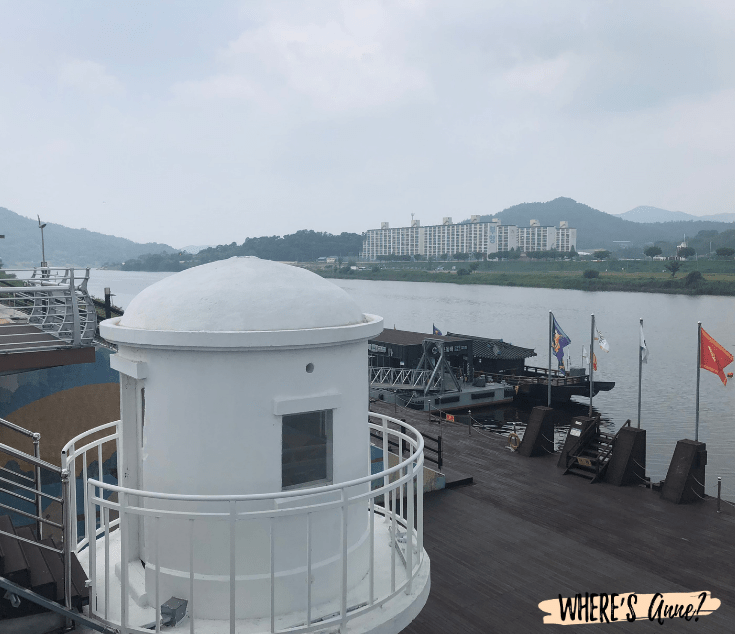
Ride a traditional Korean boat, a Dotpae (돛배), on the Yeongsan River.
To do this, you need to go out to the Yeongsan-Po District. The jetty is located across the street from Skate Street. You get a ticket – free for Naju residents and maybe 3,000w for non-residents – and you get to go on a 10 minute boat ride a good ways up the Yeongsan River. The boat ride offers exceptional views of the Naju countryside, and occasionally, they have musicians on the boat who play traditional “river boat” music. It can be quite a nice time.
Yeongsanpo Skate Festival (영산포 홍어축제)
Recommended food
Skate Fish in Yeongsanpo on Skate Street
Eel Fish
Daeungjeon Hall of Dabosa Temple
Address: 주소83, Geumseongsan-gil, Naju-si, Jeollanam-do, Republic of Korea
http://www.naju.go.kr/tour/html/sub02/0204.html?mode=V&mng_no=802
- Geumseonggwan Hall
- ☞ Address: 8, Geumseonggwan-gil, Naju-si, Jeollanam-do (전라남도 나주시 금성관길 8)
- ☞ Directions: Take Bus No. 160 from Naju Station Bus Stop to Jungang-ro Bus Stop and walk approx. 5 min
- ☞ Operating hours: 10:00-17:00 (Open all year round)
- ☞ Admission: Free
- ☞ Inquiries: +82-61-339-8613 (Korean only)
- Moksanaea (Geumhakheon House)
- ☞ Address: 13-8, Geumseonggwan-gil, Naju-si, Jeollanam-do (전라남도 나주시 금성관길 13-8)
- ☞ Directions: Take Bus No. 160 from Naju Station Bus Stop to Jungang-ro Bus Stop and walk approx. 10 min
- ☞ Operating hours
– Tour: 09:00-18:00 (Closed Mondays)
– Accommodations: Check-in 14:00 / Check-out 11:00 (Not available Mondays) - ☞ Fees
– Admission: Free
– Accommodations: 50,000~150,000 won
* Reservations accepted via phone (+82-61-332-6565), internet (www.naju.go.kr/moksanaea / Korean only), or on-site
* Same-day reservations accepted until 17:00 (16:00 on Sundays) - ☞ Inquiries: +82-61-332-6565 (Korean only)
- ☞ Website: www.naju.go.kr/moksanaea (Korean only)
- Natural Dyeing Culture Center
- ☞ Address: 379, Baekho-ro, Dasi-myeon, Naju-si, Jeollanam-do (전라남도 나주시 다시면 백호로 379)
- ☞ Directions: Take Bus No. 503, 504, or 505 from Naju Station Bus Stop to Baekha Bus Stop and walk approx. 2 min
- ☞ Operating hours
– March-October: 09:00-18:00
– November-February: 09:00-17:00 - ☞ Admission: Free (Separate fees apply to programs)
- ☞ Inquiries: +82-61-335-0091 (Korean only)
- ☞ Website: www.naturaldyeing.or.kr (Korean, English, Japanese, Chinese)
- Naju Gomtang Street
- ☞ Address: Area of Geumgye-dong, Naju-si, Jeollanam-do (전라남도 나주시 금계동)
- ☞ Directions: Take Bus No. 160 from Naju Station Bus Stop to Jungang-ro Bus Stop and walk approx. 5 min
Naju National Museum
Naju Image Theme Park (영상테마파크)
Without a doubt, this is one of Korea’s most interesting, yet most underrated tourist attractions. The name is horribly misleading as are many of Korea’s “theme parks,” which are neither themed, nor parks. This place is actually a movie/TV drama set built as an elaborate Joseon-era castle with rooms you can walk in, traditional clothes you can try on, musical instruments you can play, vendors with traditional cheledon pottery you can buy, etc. — all of which culminates in a spectacular view of the Naju countryside from atop the castle walls. It’s a good 20 minutes outside the city. Tickets cost 5,000w, and if you are a Naju resident, you can get a discount (this applies to foreigners, too, so long as your ARC lists Naju as your official address). Check out their official site for more information: http://english.visitkorea.or.kr/enu/ATR/SI_EN_3_1_1_1.jsp?cid=495604
This is the Naju Image Theme Park, where the soap operas “Jumong” and “Kingdom of the Winds” were filmed. Located in the southwestern parts of the country, the city of Naju was occupied by the Baekje Kingdom during Korea’s Three Kingdoms Period (57 B.C.-A.D. 668). First-time visitors to the theme park can reflect on the nation’s history and may have questions about the Goguryeo-style architecture.
The Naju Image Theme Park is one of the most sought-after locations to film historic soap operas, especially those set in Goguryeo (37 B.C.-A.D. 668) and Baekje (18 B.C.-A.D. 660) times. The park is surrounded by some 95 buildings.
This is the Naju Image Theme Park, where the soap operas “Jumong” and “Kingdom of the Winds” were filmed. Located in the southwestern parts of the country, the city of Naju was occupied by the Baekje Kingdom during Korea’s Three Kingdoms Period (57 B.C.-A.D. 668). First-time visitors to the theme park can reflect on the nation’s history and may have questions about the Goguryeo-style architecture.
Address:
The Natural Dyeing Culture Center (한국천연염색박물관)
(나주시천연염색문화재단)
Naju is famous for their natural dyeing, recognized as Important Intangible Cultural Heritage No. 115, and is known for developing silk weaving techniques and discovering a way to create a deep navy color for fabrics. As such, Naju is home to the Natural Dyeing Culture Center. You can easily lose track of time exploring the exhibit hall, materials room, shop, and experience hall here. The experience hall in particular offers many opportunities to make your very own souvenir, ranging from naturally dyed scarves and items of clothing to coloring and woodcraft kits.
Naju National Museum (국립박물관)
Naju Mary
Naju Pear Museum (나주배박물관)
Address: 5838, Yeongsan-ro, Geumcheon-myeon, Naju-si, Jeollanam-do
And of course what’s a trip to Naju without going to the Naju Pear Museum? It’s free. It’s fruity. It’s the Pear Museum! Learn more about this place at: http://english.visitkorea.or.kr/enu/ATR/SI_EN_3_1_1_1.jsp?cid=815382
Abandoned Bowling Alley
Nearby Dongshin University, there is a large bowling alley which has been abandoned since the 1990s. Koreans don’t seem to have the same fascination with abandoned buildings as Westerners do, so there aren’t any drug addicts or vagrants hiding in the place. It’s definitely worth a visit. If you feel so inclined, you can go bowling with ghosts and ghouls; there are plenty of bowling balls, pins, and even bowling shoes available. After you’ve finished your game, you can head downstairs and sing to your heart’s desire at the abandoned norae-bang. If you don’t believe in the netherworld, however, you can pilfer through boxes of unused shot glasses and mugs. To get there from Hoban Apartments: walk towards the university, turn right at the street that’s in front of the university. Walk about 25 yards, then, you’ll see paths that lead you towards the bowling alley on your right.
#1 of 5 Things To Do in Naju-si
Relax at Jungheung Gold Spa & Resort (중흥 골드스파 & 리조트)
A bit further out, there’s Naju’s water park. According to other websites, it costs about 37,000w to enter the park and additional money to ride the rides and eat. To learn more about this place, check out the following website: Band Adventures
Address:
Bike the Yeongsan River.
One of the best things about Naju and much of Korea is the access to the kilometers and kilometers of bike trails. You can bike all the way around the country from any one of the trails. In Naju, the trails are breathtaking in their beauty, personified by majestic farm lands, cattle yards, and truly sublime views of the River. Every 5 kilometers or so, there is a rest station; some offer maps. If you manage to bike through this area, it’s recommended that you try to pass by Neureoji Observatory (느러지전망대), which is a lookout tower, where you can stare out across an oxbow in the River. You can read more about that here: Namu Wiki
Address:
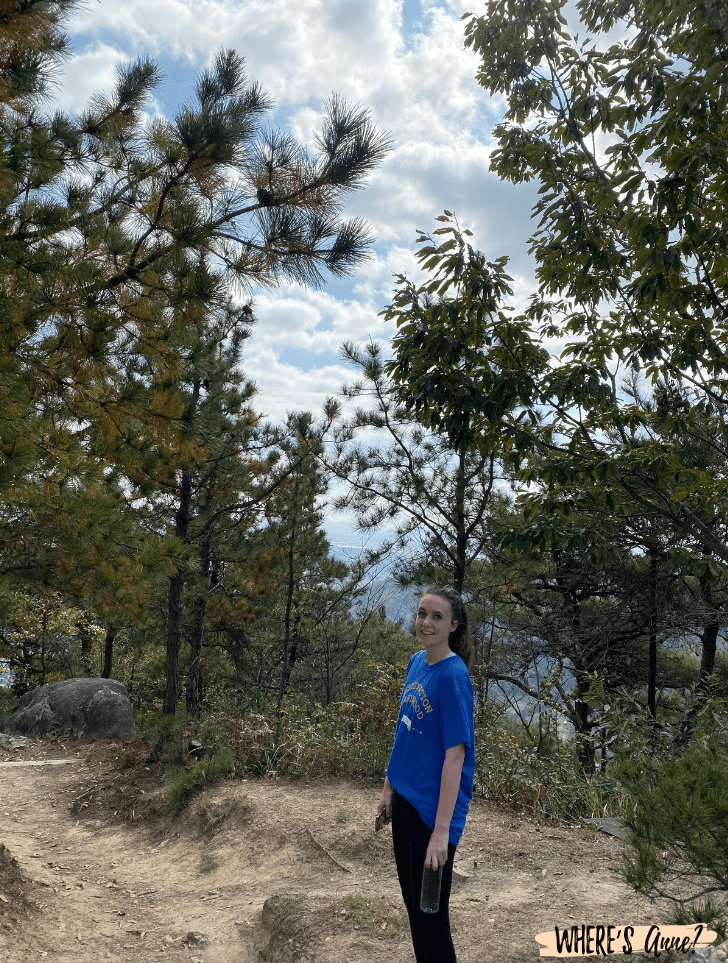
Hike Geum-seong Mountain (금성산).
It’s not a particularly tall mountain, but it does offer some stunning views and as with most mountains in Korea, quaint, enlightening Buddhist Temples nestled here and there. What makes this mountain interesting is its history: With its several jutting peaks, three in total, it has the look of a dragon’s back, and so, dating back to Korea’s shamanistic days, Geum-seong Mountain has been worshiped as a holy place. Also, during the Korean war, a group of North Korean soldiers got stranded up there after MacArthur’s famous attack on Incheon; those soldiers set up landmines around the mountain and held out until the bitter end. There’s a South Korean military base up there now, making the highest peak inaccessible. However, there is a water park located over the first ridge of the mountain; it’s only open in the summer and may look out-of-business, because they drain the pools every day (strange), but it’s definitely worth a visit.
Address:
Check out Naju Culture Center
Located between the Daebang area and City Hall, the Culture Center offers several surprisingly good theater and dance performances, and it also serves as a movie theater on occasion while the new movie theater in Innovation City is being build. The 160 and 196 buses go by here. Check out there website here: http://najuart.naju.go.kr/
Address:
Naju Festivals
Naju also hosts several festivals throughout the year.
- Naju Pear Blossom Festival (나주 배 꽃 축제) – April – Pear blossoms give cherry blossoms a run for their money in terms of their beauty and soft colors.
- Naju Rapeseed Festival (나주 유채 축제) – May – Odd sounding name but a lovely festival with breathtaking flowers.
- Naju Yeongsanpo Skate Festival (영산포 홍어축제) – May – Celebrates skate fish. Click the link to find out more: Asia English Visit Korea
- Naju Reed Festival (억새풀 축제) – September – Celebrates the reeds that grow near the river, which are quite beautiful. Walking around there, you get the feeling you’re in a horror movie or something.
- Mahan Culture Festival (마한문화축제) – October – Celebrates the traditional culture of the Mahan Kingdom, which ruled before the Three Kingdom period
- Dongshin University Festival (동신대학교 축제) – Fall – 3-day festival with live music, games, and food, which is held in the fall.
동신대학교
나주시외버스터미널
Also read my post about how-to travel from Naju to Gwangju.
How to get from Gwangju -> Bitgaram Naju Innocity without a car:
The best ways to travel between Naju and Gwangju would be from Gwangju-Songjeong Station, use the 02 bus for 30 minutes to “Lake Park” or you can get a train ticket for 10 minutes to Naju Station and then take the 700 or 701 bus to the Innocity.
Naju-Innocity bound buses: 02
How to get from Gwangju -> (Old) Naju without a car:
From Gwangju-Songjeong Station, use the 02 bus for 30 minutes, or ride on the train for 10 minutes. – Naju-bound buses: 160, 600, 601, 602, 603, 1160
Or Reasons I’m Happy to Live near Gwangju!
- 1913 Songjeong Station Market
- ☞ Address: 38, Songjeong-ro 16beon-gil, Gwangsan-gu, Gwangju (광주광역시 광산구 송정로16번길 38)
- ☞ Directions: Walk approx. 3 min from Gwangju-Songjeong Station, Exit 5
- ☞ Operating hours: Mon-Thu 11:00-22:00 / Fri-Sun 11:00-23:00 * Closed second and fourth Monday of each month
- ☞ Inquiries: +82-62-942-1914 (Korean only)
- ☞ Website: 1913songjungmarket.modoo.at (Korean only)
- Yangnim History & Culture Village
- ☞ Address: 201-64, Yangnim-dong, Nam-gu, Gwangju (광주광역시 남구 양림동 201-64)
- ☞ Directions: Walk approx. 15 min from Namgwangju Station (Gwangju Subway Line 1), Exit 3
- ☞ Operating hours: Open 24 hours (Hours vary by shop)
- ☞ Inquiries: +82-62-607-4502 (Korean only)
- ☞ Website: visityangnim.kr (Korean only)
Muan International Airport
Mokpo Station
Mokpo
Gatbawi Rock and the coastal walkway to reach it are a must when visiting Mokpo. Gatbawi Rock, Natural Monument No. 500, is said to look like two men wearing gat (traditional Korean hat). In the past, people had to ride a boat if they wanted to see the rocks. However, with the installation of a coastal footpath, visitors can easily walk to the rocks over the sea, enjoying the breeze on their way.
Gatbawi Culture Town is within walking distance, perfect for travelers who enjoy getting to know the local culture and arts. The tourism complex is comprised of the National Maritime Museum, Mokpo Culture & Arts Center, Mokpo Natural History Museum, Local Culture Hall, and Namnong Memorial Hall.
Tours
https://www.narabus.co.kr/jw_2ds/?menu_id=47:49
Leave a comment if you have any other Naju travel recommendations, corrections, or questions of life in Naju, South Jeolla province, or South Korea. 감사합니다!
Disclaimer: All text, photos, and videos are my own and property of Where’s Anne, unless stated otherwise.
Disclaimer: All information comes from my experience of Naju tours, Naju travel information pamphlets, and the sources below:
Korea.net – News Focus http://www.korea.net/NewsFocus/Travel/view?articleId=127237
WikiTravel https://wikitravel.org/en/Naju
KoreaTourInformation Blog http://koreatourinformation.com/blog/2015/05/01/naju-hometown-of-historic-figures/
